For a typical sedan driven around Dallas, front brake pads last roughly 20,000 to 35,000 miles, and rotors 50,000 to 70,000 miles. Trucks, SUVs and European cars wear through them faster. The same car driven mostly on open highway can go 50,000 miles or more on one set of front pads.
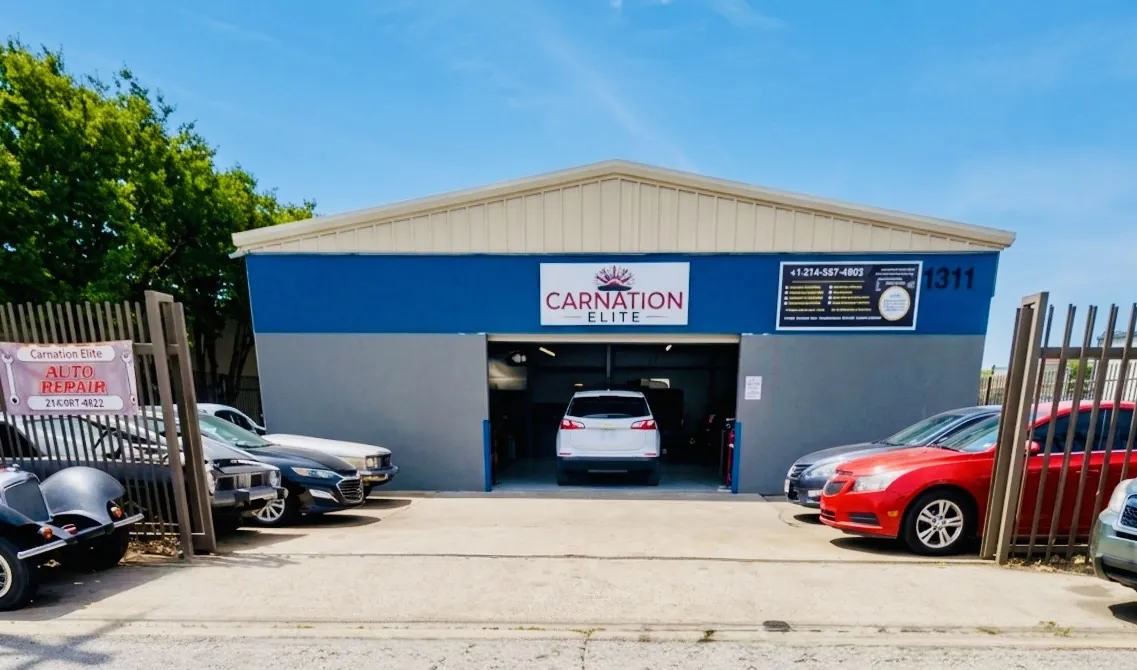
The difference is heat. Every stop turns speed into heat in your pads and rotors, and Dallas gives your brakes more stops and more heat than most places. These numbers come from what our technicians at CarNation Elite measure on cars in our Northeast Dallas bays every week.
Brake life by vehicle type in Dallas driving
| Vehicle type | Front pads | Rear pads | Rotors | Brake fluid |
|---|---|---|---|---|
| Compact car or sedan (city commute) | 20,000–35,000 mi | 30,000–50,000 mi | 50,000–70,000 mi | 2 years / 30,000 mi |
| Mid-size SUV or crossover | 18,000–30,000 mi | 25,000–45,000 mi | 40,000–60,000 mi | 2 years / 30,000 mi |
| Full-size truck or SUV | 15,000–25,000 mi | 20,000–40,000 mi | 35,000–55,000 mi | 2 years / 30,000 mi |
| European luxury vehicle | 15,000–25,000 mi | 20,000–35,000 mi | 30,000–50,000 mi | 2 years / 24,000 mi |
| Performance or sports car | 10,000–20,000 mi | 15,000–30,000 mi | 25,000–45,000 mi | 1 year / 15,000 mi |
These are real-world ranges for Dallas stop-and-go driving. Mostly-highway drivers will do better; drivers who tow or brake hard will do worse. The only way to know your number is to measure: we record pad thickness in millimeters at every inspection so you can plan the replacement.
Why Dallas wears brakes out faster
- Stop-and-go traffic on I-635, US-75 and Central Expressway creates more heat cycles per mile than highway driving.
- Summer heat above 100°F raises the whole brake system's temperature before the first stop.
- High-speed exits and on-ramps mean long, hard stops from 70 mph, the hottest kind of braking for a passenger car.
- Dense traffic brings more sudden, emergency-style stops per commute.
Rotors: resurface or replace?
New pads work best against fresh rotor surfaces. A rotor can only be safely resurfaced if two things are both true:
- After machining, it is still safely above the manufacturer's minimum discard thickness.
- The damage is light surface scoring, with no deep grooves, heat cracks or warping.
Many modern rotors leave the factory close to their minimum thickness to save weight. By the time the pads wear out, there is often nothing left to machine. A rotor cut below its limit warps and cracks more easily under heat. That is why we measure every rotor and show you the reading before recommending replacement.
Brake fluid: the part everyone forgets
Brake fluid absorbs moisture from the air over time. As moisture rises, the fluid's boiling point drops. Under a hard stop on a hot day, that fluid can boil and turn to vapor, and the pedal goes soft. Moisture also corrodes the inside of calipers, ABS units and master cylinders, which cost far more than a flush.
Recommended brake maintenance schedule
| Service | How often | Why it matters |
|---|---|---|
| Brake inspection with measurements | Every oil change (about 5,000–7,000 mi) | Catches low pads before metal-on-metal damage |
| Brake fluid moisture test | Every year | Finds contaminated fluid before it damages ABS parts |
| Brake fluid flush | Every 2 years or 30,000 mi | Restores the boiling point |
| Caliper slide pin lubrication | Every pad replacement | Prevents uneven wear and brake drag |
| Brake hose inspection | Every 2 years | A collapsed hose can trap pressure and cause drag |
| Parking brake adjustment | Every 2 years or as needed | Stretched cables are common on older vehicles |
A case from our shop
A Hyundai Sonata came in with a slow caliper leak the owner had been driving with for months. While confirming the leak, we found the car had been through several incorrect aftermarket brake booster installs at another shop, which left it with poor pedal feel. We installed an OEM booster, repaired the caliper and bled the system. The car stopped correctly for the first time in over a year. When a brake complaint keeps coming back, the part being replaced is often not the real cause.
How to make your brakes last longer
- Coast toward red lights and let the car slow before you brake.
- Don't ride the brake pedal in traffic.
- Leave an extra car length in stop-and-go traffic so you brake less often and less hard.
- Clear unneeded weight out of the trunk or truck bed.
- Keep the brake fluid fresh.
Frequently asked questions
How do I know when my brake pads need replacing?
Listen for a steady high-pitched squeal from the wear indicator, and watch for longer stopping distances or a pedal that travels further. The reliable way is to have the pads measured; most pads are replaced at about 3 mm of friction material.
Should I replace front and rear brakes at the same time?
Only if both are worn. Front pads usually wear about twice as fast as rears, so it is normal to replace the fronts once or twice before the rears are due.
Do brake pads wear faster in hot weather?
Heat speeds up pad and rotor wear and breaks down brake fluid faster. Dallas summers combined with stop-and-go traffic are one reason pads here often wear out sooner than the manufacturer's estimate.
How often should brake fluid be changed?
Every 2 years or 30,000 miles for most vehicles, sooner on performance cars. Fluid absorbs moisture over time, which lowers its boiling point and corrodes internal parts.
Get a straight answer on your car
Describe what you're seeing and we'll tell you how urgent it is. Written quote before any work starts.
Book Appointment Call (214) 597-4922