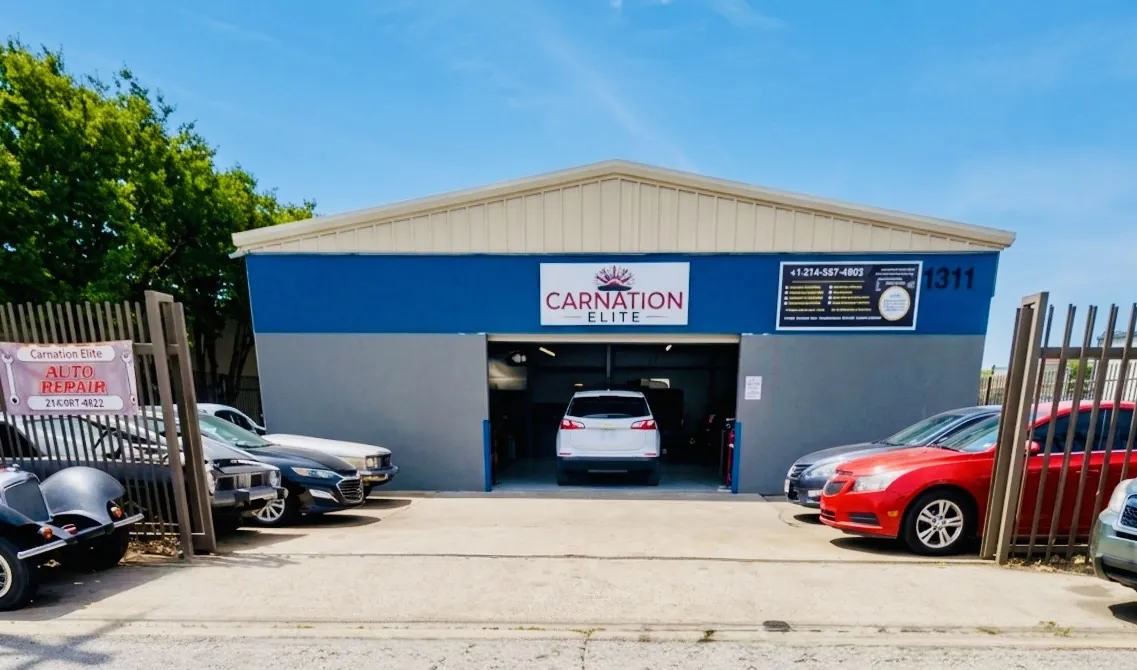
Most brake noises are your car telling you something specific. A light squeak on a cold morning can be harmless. A steady grind is not. Here is how our technicians at CarNation Elite in Northeast Dallas read each sound, and which ones mean you should stop driving.
Dallas is hard on brakes. Stop-and-go traffic on I-635, US-75 and Central Expressway means more heat cycles per mile, and summer temperatures over 100°F raise the starting temperature of the whole system before your first stop. Pads, rotors and brake fluid all age faster here than in milder cities.
Quick answer: what your brake noise means
| What you hear or feel | Most likely cause | How urgent |
|---|---|---|
| High-pitched squeal when braking | Pad wear indicator touching the rotor | Book soon (within a week or two) |
| Squeak only on the first few stops on a cold or damp morning | Light surface rust or moisture on the rotors | Usually harmless if it goes away |
| Grinding or metal-on-metal sound | Pads worn through to the steel backing plate | Urgent: stop driving if the pedal is soft or the car pulls |
| Pulsing or vibration in the pedal | Rotor thickness variation (often called warped rotors) | Book soon |
| Car pulls to one side when braking | Sticking caliper, uneven pad wear or a collapsed brake hose | Urgent |
| Soft or spongy pedal | Air or moisture in the brake fluid, a leak, or a failing master cylinder | Do not drive: call for a tow |
| Burning smell after a few stops | Brake drag from a stuck caliper or seized slide pins | Urgent |
Why brakes squeak
1. The wear indicator is doing its job
Most brake pads have a small metal tab that touches the rotor when the friction material gets thin. It makes a sharp, repeating squeal, usually every time you press the pedal. It is designed to annoy you into booking a brake inspection before the pads are gone. You still have some pad left, but not much.
2. Moisture or light rust on the rotors
After a rainy night or a car wash, a thin film of rust forms on bare rotor surfaces. The first few stops scrape it off and can squeak. If the noise disappears after a mile or two, it is normal.
3. Glazed pads or rotors
Hard stops coming off LBJ or riding the brakes in heavy traffic can overheat pads until their surface hardens into a glaze. Glazed pads squeal and grip less. The fix is new pads and either resurfaced or new rotors.
4. Missing or worn hardware
Anti-rattle clips, shims and lubricated slide pins keep pads quiet. When a previous brake job skipped them, the pads vibrate and squeal even when they are new.
5. Cheap pad material
Bargain pads are a common cause of noise and early rotor wear. We use OEM-quality or better friction material because the cheapest pads often warp rotors and squeal within about 6,000 miles.
Why brakes grind
Grinding almost always means the friction material is gone and the steel backing plate is scraping the rotor. Every stop now cuts into the rotor. The longer you drive, the more the repair grows: rotors get scored past saving, heat builds, and calipers can seize.
We see this regularly. One full-size pickup came in after the owner ignored a grinding noise for several months. The pads were worn through on all four corners, both front rotors were destroyed, a rear caliper had seized from the heat, and the brake fluid was dark and contaminated. What would have been a $400 to $600 pad and rotor job became a repair of more than $1,800.
Grinding can occasionally come from a stone or debris caught between the rotor and its dust shield. That sounds more like a scrape that comes and goes. Either way, it needs to be looked at, not waited out.
When to stop driving and call a tow
What a proper brake inspection checks
A squeak is a symptom, not a diagnosis. A good brake inspection takes the wheels off and measures, rather than guessing from the sound. At our shop that means:
- Pad thickness measured on all four corners
- Rotor thickness compared with the manufacturer's discard limit, and runout checked when there is a vibration
- Calipers, pistons and slide pins checked for sticking or corrosion
- Brake hoses checked for cracks, swelling or internal collapse
- Brake fluid tested for moisture
- A road test before and after the repair
We show you the measurements before recommending anything. Sometimes the answer is that your pads have plenty of life left and the noise is just moisture. Brake pads with installation run $149 per axle and rotors $229 per axle at our shop; see our published prices.
How to keep brakes quiet longer
- Coast toward red lights instead of braking late and hard.
- Don't rest your foot on the brake pedal in traffic.
- Flush brake fluid every 2 years or 30,000 miles, since moisture-loaded fluid boils sooner in Texas heat.
- Ask for pads to be checked at every oil change.
Frequently asked questions
Is it safe to drive with squeaky brakes?
Usually for a short time, if the pedal feels firm and the car stops straight. A squeal from the wear indicator means the pads are low, so book an inspection within a week or two. Grinding, a soft pedal or pulling to one side are different: get it checked right away.
Why do my brakes squeak in the morning and then stop?
Overnight moisture leaves a thin layer of rust on the rotors. The first few stops wipe it off, and the noise goes away. That's normal. If the squeak lasts all day, the pads or hardware need attention.
Do I need new rotors when I replace brake pads?
Not always. If the rotors are above the manufacturer's minimum thickness and only lightly scored, they can be resurfaced. Many modern rotors are thin from the factory, so replacement is often the better choice. We measure and show you the number first.
Why do my new brakes squeak?
New pads can squeak while they bed in during the first 100 to 200 miles. If it continues, the usual causes are missing shims or clips, dry slide pins, or low-quality pad material.
How long does a brake job take?
A front or rear pad and rotor replacement on a typical car takes 1 to 2 hours. All four corners with caliper service and a fluid flush takes about 2.5 to 3.5 hours.
Get a straight answer on your car
Describe what you're seeing and we'll tell you how urgent it is. Written quote before any work starts.
Book Appointment Call (214) 597-4922