A car diagnostic test reads the trouble codes stored in your vehicle's computers, then uses live sensor data, freeze-frame data and hands-on testing to find the actual cause. The code tells you which system noticed a problem. The diagnosis tells you which part, wire or leak is causing it.
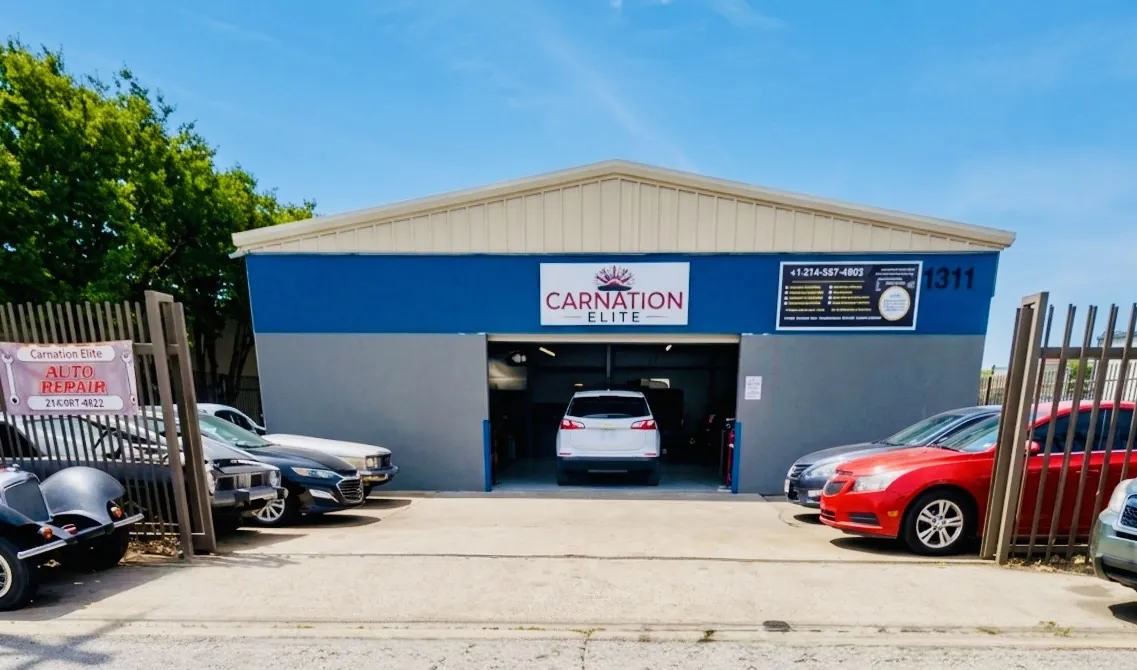
That difference is where most wasted repair money goes. At CarNation Elite in Northeast Dallas, diagnostics and automotive electrical work are what we're known for, and the most common thing we see is a car that already had parts replaced based on a code alone.
Code read vs. real diagnostic
| Free code read (parts store) | Professional diagnostic | |
|---|---|---|
| What it reads | Generic engine codes only | All modules: engine, transmission, ABS, airbag, climate, body |
| Live data | No | Yes, watched while the car runs and on a road test |
| Freeze-frame data | Rarely | Yes: what the engine was doing when the fault set |
| Physical testing | No | Wiring, voltage, vacuum, fuel pressure, component tests |
| Result | A code number and a list of possible parts | The confirmed cause and a written repair plan |
What a full diagnostic checks
1. Every computer module, not just the engine
Modern cars have dozens of control modules. A professional scan tool reads the engine and transmission plus ABS, airbags, climate control and body electronics. A fault in one module can trigger symptoms in another.
2. Stored, pending and history codes
Pending codes show problems the computer has seen but not yet confirmed. They often explain intermittent issues that don't turn the light on yet.
3. Freeze-frame data
When a code sets, the computer records a snapshot: engine temperature, speed, load, fuel trims. That tells us whether the fault happened on a cold start, at highway speed or while idling in traffic.
4. Live data
We watch sensors in real time: oxygen sensors switching, fuel trims, misfire counters, coolant temperature. A sensor that reads plausible numbers but responds slowly won't always set a code.
5. Physical inspection and testing
Belts, hoses, vacuum lines, connectors and wiring get checked by hand. We test voltage and ground circuits, smoke-test for vacuum and EVAP leaks, and test individual components before anything gets replaced.
Why the code alone isn't enough
Take code P0420, "catalyst efficiency below threshold." It could be a failing catalytic converter. It could also be a bad oxygen sensor, an exhaust leak, or an engine misfire that is overheating the converter. Replace the converter without checking and you can spend over a thousand dollars and still have the light come back.
The same goes for a "lean" code. That can be a vacuum leak, a dirty mass airflow sensor, a weak fuel pump or a clogged injector. Each fix is different, and only testing tells them apart.
How long does it take?
Most full scans and initial analysis take 45 to 60 minutes. Intermittent faults, electrical problems and issues that only appear on a road test can take longer. We give you a realistic time estimate before we start.
When to get a diagnostic
- The check engine light is on (if it's flashing, stop driving: that means an active misfire)
- Rough idle or stalling in traffic
- Hesitation when accelerating or merging
- A sudden drop in fuel economy
- A warning light came back after someone cleared it
- Electrical problems: battery drain, dead modules, gauges or lights acting up
- Before buying a used car
Frequently asked questions
Can a diagnostic test find every problem?
It finds problems the car's computers can see, plus what a technician finds by testing. Purely mechanical issues, like worn suspension or a noise, need a physical inspection and road test as well.
Is a free code scan from a parts store worth it?
It's a useful starting point to see which system flagged a problem. It is not a diagnosis, and buying the part the code suggests is a common way to spend money without fixing the car.
Can I drive with the check engine light on?
If it's solid and the car drives normally, get it checked soon. If it's flashing, stop driving: an active misfire can damage the catalytic converter within a short distance.
Why did my check engine light come back after it was cleared?
Clearing the code doesn't fix the cause. Once the car's self-tests run again and find the same fault, the light returns.
Get a straight answer on your car
Describe what you're seeing and we'll tell you how urgent it is. Written quote before any work starts.
Book Appointment Call (214) 597-4922