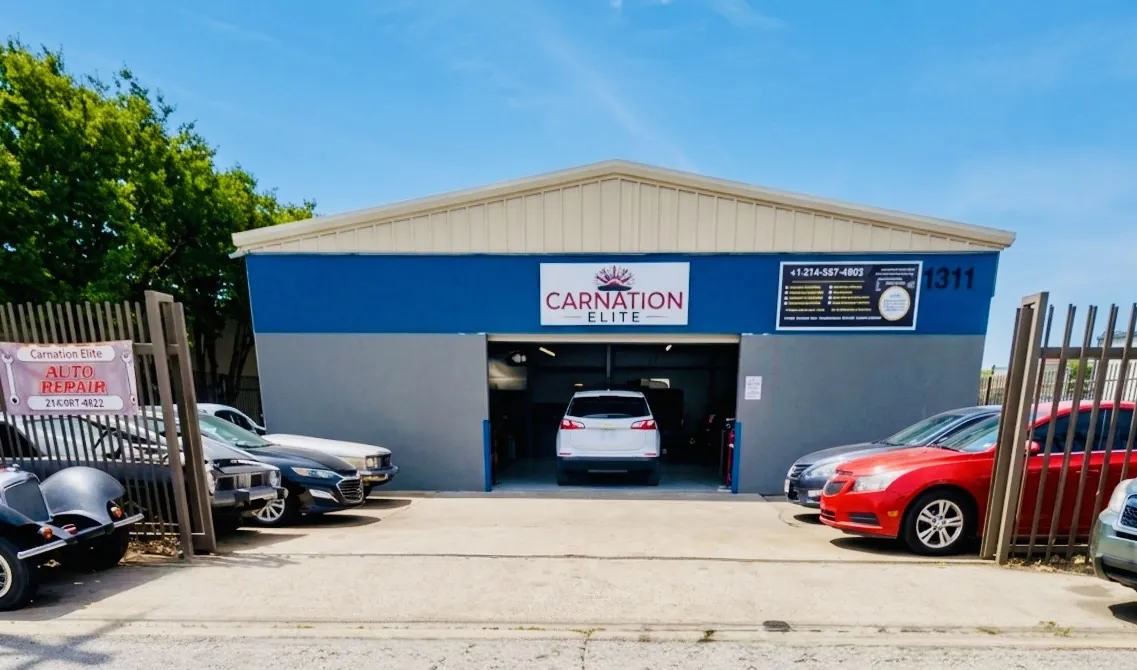
Fords in Dallas work hard: F-150s tow and haul, Explorers rack up family miles, and fleet trucks rarely rest. The Ford problems we see most at CarNation Elite are timing chain and cam phaser wear on F-150 engines, the internal water pump on the 3.5L V6 used in the Explorer and others, shifting complaints on the 10-speed automatic, and carbon buildup on direct-injection EcoBoost engines.
Common Ford problems at a glance
| Problem | Commonly reported on | Warning signs |
|---|---|---|
| Timing chain stretch and cam phaser rattle | 3.5L EcoBoost F-150, roughly 2011–2017 | Rattle on cold start, timing-related check engine codes |
| Cam phaser failure | 5.4L 3-valve V8, roughly 2004–2010 F-150 and Expedition | Ticking or diesel-like knock at idle, rough idle |
| Internal water pump failure | 3.5L V6 (non-turbo and some EcoBoost) in Explorer, Edge, Taurus, Flex and others | Coolant loss with no visible leak, overheating, milky oil |
| Harsh or erratic shifting | 10-speed automatic in F-150, Expedition, Explorer, Ranger | Clunky shifts, hunting for gears |
| Intake valve carbon buildup | Direct-injection EcoBoost engines | Rough idle, cold-start misfires, lost power |
| Spark plug removal problems | 5.4L 3-valve V8 | Plugs breaking during replacement (needs experienced handling) |
1. F-150 EcoBoost timing chain and cam phasers
On many 3.5L EcoBoost F-150s from about 2011 to 2017, a rattle for a few seconds on cold start points to stretched timing chains or worn cam phasers. Timing codes often follow. Fixing it early is far cheaper than waiting for the chain to cause engine damage. Frequent oil changes with the correct oil help chain life.
2. 5.4L V8 cam phasers
The 5.4L three-valve V8 in older F-150s and Expeditions is known for cam phaser problems that sound like a ticking or diesel-like knock at idle. Low or dirty oil makes it worse. These engines also have a reputation for spark plugs that break during removal, so plug changes should be done by a shop that knows the procedure.
3. The 3.5L V6 internal water pump
On many Explorers, Edges, Flexes and Tauruses with the 3.5L V6, the water pump sits inside the engine and is driven by the timing chain. When its seal fails, coolant can leak into the oil instead of onto the ground. Watch for a coolant level that keeps dropping with no visible leak, or milky oil. Catch it early: coolant in the oil can damage bearings and turn a pump job into an engine replacement.
4. 10-speed transmission shifting
Some owners of trucks and SUVs with the 10-speed automatic report harsh, clunky or erratic shifts. Software updates and the transmission's adaptive relearn procedure resolve many cases. A proper diagnosis comes before any major transmission work.
5. EcoBoost carbon buildup
Direct-injection engines don't wash fuel over the intake valves, so carbon builds up over time. At higher mileage, rough idle and cold-start misfires are common symptoms, and an intake valve cleaning is the fix.
Keeping a Ford truck or SUV healthy
- Change oil on time with the correct spec; timing chains and phasers depend on it.
- If you tow in Texas heat, follow the severe-service schedule for oil and transmission fluid.
- On a 3.5L V6, check coolant level regularly and investigate any unexplained loss.
- Don't ignore a cold-start rattle.
- Get a pre-purchase inspection on any used F-150 or Explorer.
Will an independent shop void my Ford warranty?
No. Under the Magnuson-Moss Warranty Act, Ford can't void your warranty because you used an independent shop for maintenance, as long as the work follows Ford's specifications. We document every visit.
Frequently asked questions
Why does my F-150 rattle on cold start?
On many 2011 to 2017 3.5L EcoBoost F-150s, a cold-start rattle points to timing chain stretch or worn cam phasers. Have it diagnosed soon to avoid engine damage.
How do I know if my Explorer's water pump is failing?
On 3.5L V6 Explorers, watch for coolant loss with no visible leak, overheating, or milky oil. The pump is internal, so coolant can leak into the oil. Get it checked right away.
Is the Ford 10-speed transmission reliable?
Many run without issues, but some owners report harsh or erratic shifts. Software updates and an adaptive relearn fix many cases.
How often should I change the oil in an EcoBoost?
Follow the oil-life monitor, but in Dallas heat or when towing, many owners change it closer to every 5,000 miles to protect turbos and timing chains.
Get a straight answer on your car
Describe what you're seeing and we'll tell you how urgent it is. Written quote before any work starts.
Book Appointment Call (214) 597-4922