Halloween should mean costumes, candy and spooky fun, not a breakdown on the way to a party or while you're out trick-or-treating. Picture it: you're crawling through Dallas traffic when the check engine light comes on, the brakes start squealing, or the temperature gauge starts to climb. A fun evening suddenly turns stressful and expensive.
Most serious car problems start with small warning signs: a new noise, a dashboard light, a spot under the car, or a change in how it drives. Catch them early and they're usually quick, affordable fixes.
The seven car problems Dallas drivers shouldn't ignore are the ones that affect safety or get more expensive the longer you wait:
Halloween Week Special, Oct 26–31: $49.99 vehicle inspection. We check brakes, tires, lights, fluids, battery, belts and hoses, and you get clear estimates before any additional repairs. Local business fleets: ask about complimentary initial diagnostic checks. Book this week →
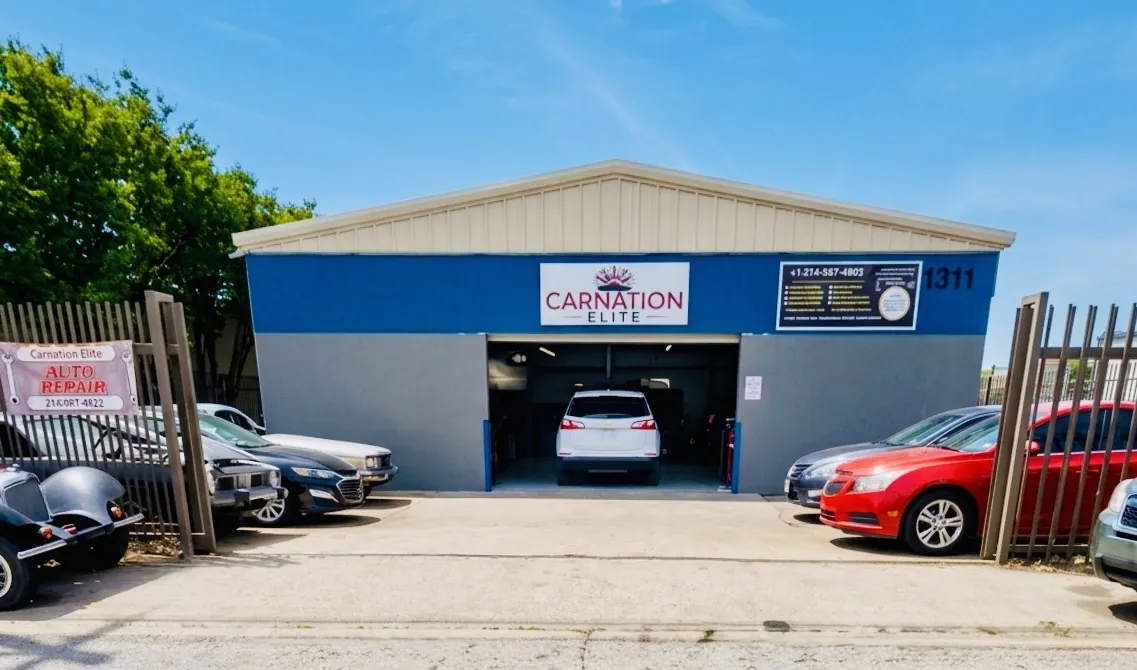
Written by the CarNation Elite technicians, serving Dallas, Richardson, Plano and Addison for 15+ years. These are the warning signs we see most often on cars that come in on a tow truck, and what each one usually costs to fix when it's caught early.
Why Dallas Drivers See These Problems More Often
North Texas is tough on cars. Months of triple-digit summer heat wear out batteries, coolant hoses and AC systems, and those weaknesses often surface in fall, when the first cool mornings arrive. Daily stop-and-go traffic on LBJ Freeway (I-635), Central Expressway (US-75) and I-35E chews through brake pads and puts heat into engines and transmissions. Big temperature swings this time of year also change tire pressures overnight.
1 Brake Problems: When Stopping Becomes Scary
Your brakes are the most important safety system on your vehicle, and they almost always warn you before they fail.
Warning signs
- Squealing, grinding or scraping when you brake
- A soft, spongy or unusually hard brake pedal
- Vibration in the steering wheel or pedal
- The car pulls to one side when stopping
- Brake warning light on the dashboard
Why you shouldn't ignore it
Squealing usually means the pads are worn down to their wear indicators. Grinding often means metal on metal, which damages the rotors and turns a pad job into a pads-and-rotors job. A soft pedal can signal a hydraulic problem such as a leak or air in the lines. Any of these increases your stopping distance.
In Dallas stop-and-go traffic, pads can wear out much faster than the mileage on the box suggests. See how long brake pads last in Dallas traffic.
What to do
Book a brake inspection as soon as you notice a change. If the pedal sinks toward the floor or the brakes feel unreliable, stop driving when it's safe and call for help.
2 Check Engine Light: Don't Ignore the Warning
A check engine light can mean anything from a loose gas cap to a misfire, a failing sensor or an emissions-system fault.
Warning signs
- The light stays on
- Rough idle or shaking
- Less power or worse fuel economy
- Hard starting
- Unusual smells or performance changes
Why you shouldn't ignore it
Some causes are minor, but others get worse and more expensive with every mile. A code reader only tells you which system flagged a fault; a proper diagnostic finds out why. See 15 common check engine light causes.
What to do
- Flashing light with rough running or loss of power: ease off, pull over safely and get prompt help. A severe misfire can overheat and ruin the catalytic converter.
- Steady light and the car drives normally: schedule a diagnostic soon.
3 Engine Overheating: A Real-Life Halloween Nightmare
Few things are more stressful than watching the temperature gauge climb while you're stuck in traffic.
Warning signs
- Temperature gauge above its normal position
- Temperature warning light
- Steam from under the hood
- Coolant puddle under the vehicle
- A sweet, syrupy smell
Why you shouldn't ignore it
Running an engine hot for even a few minutes can warp the cylinder head or blow the head gasket, turning a $300 fix into a multi-thousand-dollar repair.
After a Dallas summer, coolant hoses and plastic radiator parts are often brittle. A small seep in October can become a burst hose on the highway.
What to do
Pull over safely, turn off the engine and let it cool. Never open a hot radiator or coolant reservoir; the system is under pressure and can cause serious burns. If there's steam or the temperature stays high, call for roadside assistance instead of driving on.
4 Battery Problems: Don't Get Stranded After Dark
A weak battery usually gives warning signs before it leaves you stuck in a parking lot after the party.
Warning signs
- Slow or labored cranking
- Clicking when you turn the key
- Dim headlights or interior lights
- Battery warning light
- Needing repeated jump-starts
Why you shouldn't ignore it
Texas heat is harder on batteries than cold, and a battery weakened over the summer often fails on the first cool morning. Starting trouble can also come from the alternator, starter or a corroded connection, so a proper test matters before you buy parts. See what to check when your car won't start.
What to do
Have the battery and charging system tested if you notice any of these signs, especially if the battery is more than three years old.
5 Tire Problems: Small Defects, Big Risks
Your tires are the only part of the car touching the road. Their condition affects traction, handling and braking distance.
Warning signs
- Tire pressure (TPMS) warning light
- Cracks, bulges or cuts in the sidewall
- Uneven or excessive tread wear
- A tire that keeps losing air
- Vibration or odd handling
Why you shouldn't ignore it
Damaged or underinflated tires are far more likely to fail at speed. Tire pressure drops about 1 PSI for every 10°F the temperature falls, so the first cool fall mornings in Dallas often trigger pressure lights.
What to do
Check pressures against the sticker in the driver's door jamb, not the number on the tire. Look over the tread and sidewalls regularly. Don't drive on a tire with a bulge, exposed cords or major damage.
6 Suspension and Steering: When Your Car Doesn't Feel Right
Your vehicle should feel predictable over bumps and through turns.
Warning signs
- Clunking or knocking over bumps
- Excessive bouncing after a dip
- Loose, wandering or stiff steering
- Pulling to one side
- Uneven tire wear or an unstable ride
Why you shouldn't ignore it
Worn shocks, struts, ball joints or tie rods affect control, especially in an emergency stop or swerve. Proper diagnosis matters because tire and alignment problems can feel similar.
Dallas potholes and shifting clay soil that cracks roads put extra stress on suspension parts.
What to do
Book an inspection if the change persists. If the steering ever feels unsafe, stop driving when it's safe and get professional help.
7 Fluid Leaks: The Mystery Under Your Car
A small spot on the driveway can be the first sign of a developing problem. The color is your best clue:
| Color | Likely fluid | How urgent |
|---|---|---|
| Brown or black, oily | Engine oil | Check level; book soon |
| Green, orange or pink, sweet smell | Coolant | Book soon; watch the temperature gauge |
| Red or reddish-brown | Transmission or power steering fluid | Book soon |
| Clear to amber, slick, near a wheel | Brake fluid | Stop driving |
| Clear water under the front | AC condensation | Normal in Dallas heat |
Warning signs
- Fresh spots or puddles where you park
- Oil or coolant levels dropping between checks
- A burning smell while driving
- Changes in braking or steering feel
What to do
Monitor fluid levels and how the car behaves. Don't touch or taste unknown fluids. A significant leak or any sudden loss of braking performance means don't drive until the vehicle is checked.
What These Repairs Cost in Dallas
Catching a problem early is almost always cheaper. Here's what to expect for the most common fixes:
| Problem | Common fix | CarNation Elite | Typical Dallas range |
|---|---|---|---|
| Brake noise | Pads (per axle) | $149 | $150–$300 |
| Brake grinding | Rotors (per axle) | $229 | $280–$380 |
| Check engine light | Engine diagnostic | $125 | $90–$190 |
| Overheating | Coolant flush | $99.99 | $120–$160 |
| Weak battery | Battery replacement | $139 | $150–$350 |
| Uneven tire wear | Tire rotation | $24.99 | $35–$55 |
| Not sure what's wrong | Halloween vehicle inspection | $49.99 | Through Oct 31 |
CarNation Elite prices are flat-rate for sedans and regular cars, parts and labor included. For larger repairs, see our 2026 Dallas auto repair cost guide.
When Should You Visit an Auto Repair Shop?
Stop driving and get help
- Brake pedal sinks or brakes fail
- Loss of steering control
- Severe overheating or steam
- Flashing check engine light with rough running
- Brake fluid leak
Book an appointment soon
- Steady check engine light, car drives normally
- New brake or suspension noises
- Recurring slow starts
- Small oil or coolant leaks
- Tire pressure light that keeps returning
A professional diagnosis tells you what's happening, what's necessary now, and what can wait.
Bonus: Halloween Safety Checklist for Dallas Drivers
Before you head out to a party or trick-or-treating, take five minutes to:
- Test headlights, brake lights and turn signals; kids in costumes are hard to see after dark
- Check the dashboard for warning lights
- Check tire pressure and look for visible damage
- Listen for unusual noises from the brakes, engine or suspension
- Look under the car for fresh leaks
- Make sure wipers and washer fluid work
- Fill up the tank before you go
Fix any serious safety or mechanical issue before you leave, and drive slowly through neighborhoods on Halloween night.
Frequently Asked Questions
What car problems should Dallas drivers never ignore?
Brake problems, engine overheating, a flashing check engine light, steering difficulties, significant fluid leaks, tire damage, and repeated starting issues. How urgent each one is depends on how the symptoms affect safety.
Is it safe to drive with the check engine light on?
A steady light usually means you should get a diagnosis soon. A flashing light, especially with shaking or loss of power, is more urgent: stop when it is safe and get professional help, because continued driving can damage the catalytic converter.
Why is my car overheating in traffic?
Common causes include low coolant, a clogged radiator, a faulty cooling fan, a stuck thermostat, or a failing water pump. In stop-and-go traffic the cooling fan does most of the work, so fan problems often show up there first. Stop safely and never open a hot cooling system.
How do I know if my car battery is failing?
Slow cranking, clicking when you turn the key, dim lights, and needing repeated jump-starts are common signs. A battery and charging-system test tells you whether the battery, alternator, starter or a connection is the real cause.
How often should I have my car inspected?
Follow your manufacturer's maintenance schedule, and add an inspection whenever you notice unusual noises, warning lights, leaks, or changes in how the car drives. Dallas heat and stop-and-go traffic mean many cars need brakes, batteries and cooling-system parts sooner than average.
Where can I get auto repair in Dallas, TX?
CarNation Elite Auto Repair is at 13610 Floyd Circle, Dallas, TX 75243, serving Dallas, Richardson, Plano and Addison. Call (214) 597-4922 or book online. Hours are Monday to Saturday, 9am to 6pm, with 24/7 roadside assistance.
Don't let car trouble haunt your Halloween
Book your $49.99 Halloween Week inspection (Oct 26–31) and drive into the holiday knowing your brakes, battery, tires and fluids are ready. Brake, engine, AC, suspension and general repair, always with a clear estimate before any additional work. Local business fleets: ask about complimentary initial diagnostic checks.
Book My $49.99 Inspection Call (214) 597-4922